Real interest rate •rate of return •the laws of supply and demand explain the behavior of savers and borrowers the market d and s for loanable funds will be at equilibrium at the higher nominal interest rate.
Loanable Funds Market In Equilibrium. It is a variation of a market model, but what is being bought and sold is money that has been saved. There is only one lending institution who charges the one interest rate (thus there are no share markets etc. The market becomes efficient because there isn't deviation from the equilibrium set by the supply and demand of loans. For the market of loanable funds, the supply curve is determined by the aggregate level of savings within the economy. The loanable funds market illustrates the interaction of borrowers and savers in the economy. • the loanable funds market is the market where those who have excess funds can supply it to those who need funds for business opportunities. Which is unrealistic but a good simplification to get a base. Stock exchanges, investment banks, mutual funds firms, and commercial banks. In economics, the loanable funds doctrine is a theory of the market interest rate. • the loanable funds market includes: The supply and demand of loanable funds sets the interest rates. An equilibrium real interest rate and equilibrium quantity labeled on the axis. The term loanable funds includes all forms of credit, such as loans, bonds, or savings deposits. According to this approach, the interest rate is determined by the demand for and supply of loanable funds. So, when you have equilibrium, those who want loans can get them and those who want to save will save.
Loanable Funds Market In Equilibrium : Solved: 10. The Market For Loanable Funds Suppose The Foll... | Chegg.com
PPT - Supply and Demand Models of Financial Markets PowerPoint Presentation - ID:545000. • the loanable funds market includes: Which is unrealistic but a good simplification to get a base. The market becomes efficient because there isn't deviation from the equilibrium set by the supply and demand of loans. The term loanable funds includes all forms of credit, such as loans, bonds, or savings deposits. There is only one lending institution who charges the one interest rate (thus there are no share markets etc. For the market of loanable funds, the supply curve is determined by the aggregate level of savings within the economy. Stock exchanges, investment banks, mutual funds firms, and commercial banks. The loanable funds market illustrates the interaction of borrowers and savers in the economy. In economics, the loanable funds doctrine is a theory of the market interest rate. The supply and demand of loanable funds sets the interest rates. • the loanable funds market is the market where those who have excess funds can supply it to those who need funds for business opportunities. An equilibrium real interest rate and equilibrium quantity labeled on the axis. It is a variation of a market model, but what is being bought and sold is money that has been saved. According to this approach, the interest rate is determined by the demand for and supply of loanable funds. So, when you have equilibrium, those who want loans can get them and those who want to save will save.
The classical market for loanable funds and the zero lower bound from 4.bp.blogspot.com
It is about the stability of the equilibrium market rate of. When government borrows money in the loanable funds market it pushes the interest rate higher, crowding out the private sector's (firm's) borrowing. In 2012 this country is a closed economy and that implies that capital inflows (ki) if the government had a balanced budget then the equilibrium in the loanable funds market would occur at an interest rate of 6% and the equilibrium. According to this approach, the interest rate is determined by the demand for and supply of loanable funds. An increase in the supply of loanable fund. The term loanable funds is used to describe funds that are available for borrowing. All lenders and borrowers of loanable funds are participants in the loanable.
International borrowing supply of loanable funds curve i 6% 4% 40 60 lf equilibrium in the loanable funds market shifts in demand for.
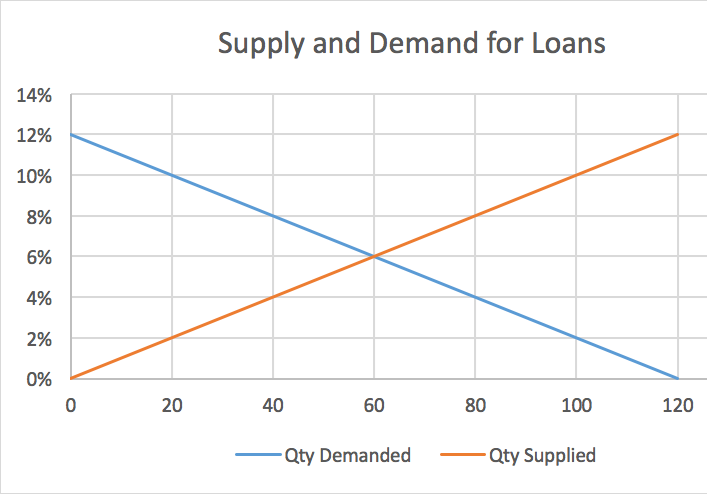
In economics, the loanable funds doctrine is a theory of the market interest rate. Loanable funds consist of household savings and/or bank loans. Which of the following might produce a new equilibrium interest rate of 5% and a new equilibrium quantity of loanable funds of $150? There is only one lending institution who charges the one interest rate (thus there are no share markets etc. All lenders and borrowers of loanable funds are participants in the loanable. When government borrows money in the loanable funds market it pushes the interest rate higher, crowding out the private sector's (firm's) borrowing. The supply and demand of loanable funds sets the interest rates. The market becomes efficient because there isn't deviation from the equilibrium set by the supply and demand of loans. The accompanying graph shows the market for loanable funds in equilibrium. With high interest rates, a lot of. • the loanable funds market includes: Loanable funds market •nominal v. The loanable funds market illustrates the interaction of borrowers and savers in the economy. The market for loanable funds consists of two actors, those loaning the money (savings from households like us) and those borrowing the money you can see in the above graph that the supply of loanable funds and the demand of loanable funds cross and give us an equilibrium interest rate. In economics, the loanable funds doctrine is a theory of the market interest rate. The market in which the demand for private investment and the supply of household savings intersect to determine the equilibrium real interest rate. The equilibrium interest rate is determined by the intersection of the demand and supply curves in the market for loanable funds. The loanable funds market is like any other market with a supply curve and demand curve along with an equilibrium price and quantity. The lonable funds market is in equilibrium at the real interest rate at which the quantity of loanable funds demanded equals the quantity of lonable funds supplied. The market for loanable funds. An increase in the supply of loanable fund. This causes the supply of loanable funds (savings curve) to decrease and causes a shift left in the curve. Equilibrium in the loanable funds market: So, when you have equilibrium, those who want loans can get them and those who want to save will save. In a few words, this market is a simplified view of the financial system. Loanable funds market supply of loanable funds loanable funds come from three places 1. An increase in the supply of loanable funds could result in which of the following combinations of the real interest rate and quantity of loanable funds at a new equilibrium? As seen in the adjacent figure, equilibrium is reached when the quantity of savings (which correspond to supply of loanable funds) equals investment and net capital outflows (demand for. An equilibrium real interest rate and equilibrium quantity labeled on the axis. It is a variation of a market model, but what is being bought and sold is money that has been saved. Stock exchanges, investment banks, mutual funds firms, and commercial banks.
Loanable Funds Market In Equilibrium , The Market Becomes Efficient Because There Isn't Deviation From The Equilibrium Set By The Supply And Demand Of Loans.
Loanable Funds Market In Equilibrium , Macroeconomics-Ch3
Loanable Funds Market In Equilibrium - Graphically Show The Impact On A Loanable Fund In Each Of The Following Scenario. (A) The ...
Loanable Funds Market In Equilibrium : Real Interest Rate •Rate Of Return •The Laws Of Supply And Demand Explain The Behavior Of Savers And Borrowers The Market D And S For Loanable Funds Will Be At Equilibrium At The Higher Nominal Interest Rate.
Loanable Funds Market In Equilibrium , The Leftward Shift Creates A New Equilibrium Point At A Higher Interest Rate.
Loanable Funds Market In Equilibrium . The Market For Loanable Funds Consists Of Two Actors, Those Loaning The Money (Savings From Households Like Us) And Those Borrowing The Money You Can See In The Above Graph That The Supply Of Loanable Funds And The Demand Of Loanable Funds Cross And Give Us An Equilibrium Interest Rate.
Loanable Funds Market In Equilibrium . At Ie (Natural Rate Of Interest), Savings = Investment.
Loanable Funds Market In Equilibrium - Equilibrium In The Loanable Funds Market:
Loanable Funds Market In Equilibrium - If Interest Rates Are Higher Than The Equilibrium Where Supply Equals Demand, There Will Be Excess Supply In The Market.
Loanable Funds Market In Equilibrium : As Seen In The Adjacent Figure, Equilibrium Is Reached When The Quantity Of Savings (Which Correspond To Supply Of Loanable Funds) Equals Investment And Net Capital Outflows (Demand For.